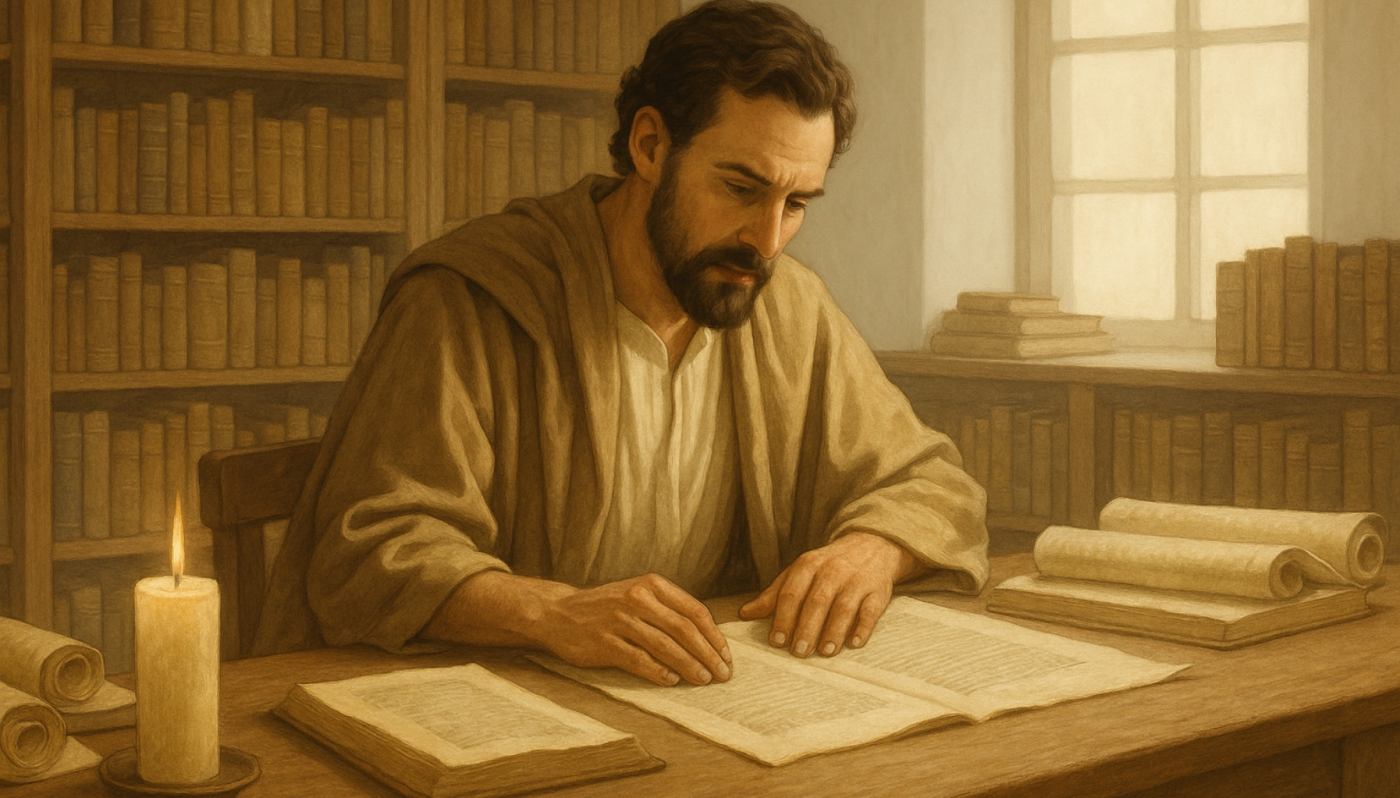
The Bible vs. Google: Where Are We Really Looking for Answers?
In a world that tells us to “Google it,” discover why Christians can turn first to Scripture, prayer, and meditation for lasting spiritual truth and guidance.


Does your business exist solely to generate profit, or does it serve a higher purpose? For the secular world, the bottom line is the ultimate measuring stick. But for the believer, the metrics of success are radically different. We are called to operate with a distinct competitive advantage: the guidance of the Holy Spirit and a mandate from heaven.
The scripture tells us in 2 Corinthians 5:19-20:
"That is, in Christ, God was reconciling the world to himself, not counting their trespasses against them, and he has committed the message of reconciliation to us. Therefore, we are ambassadors for Christ, since God is making his appeal through us. We plead on Christ’s behalf, 'Be reconciled to God.'"
This passage isn't just for pastors or missionaries. It is the job description for every Christian entrepreneur. When you step into your office, log onto a Zoom call, or negotiate a contract, you are stepping into your role as an ambassador. But what does that actually look like in the grit and grind of daily commerce?
An ambassador does not represent themselves. They do not speak on their own authority, nor do they pursue their own agenda. An ambassador is a representative of a King sent into a foreign land to enact the will of that King.
As business leaders, this changes everything. It means your startup, your LLC, or your corporation is actually an embassy. It is an outpost of the Kingdom of God planted in the marketplace. When clients interact with your company, they should get a taste of how the King operates. Are your policies reflective of His grace? Is your customer service reflective of His kindness?
We are tasked with the "message of reconciliation." In a business context, this means our interactions should bridge gaps, heal divides, and bring people closer to the truth of God's character. We are not just selling products; we are modeling the Gospel.
To be a Christian in the marketplace is to be held to a higher standard. We are to be professional, honest, kind, and moral, even when the industry standard is cutthroat.
How often do we see businesses cutting corners to save a percentage point? How often do we see leaders throwing employees under the bus to save face? The world expects this. But as ambassadors, we must offer something better.
We must embrace radical honesty. When a shipment is late, do we lie to cover it up, or do we own the mistake with integrity? When a vendor undercharges us by accident, do we stay silent to keep the extra cash, or do we correct the invoice because it is the right thing to do?
Your reputation is the platform upon which your message stands. If your business dealings are shady, your testimony is silenced. By operating with excellence and high moral character, we earn the right to be heard.
Let’s be honest: we are humans. We fail. We miss deadlines, we make bad hires, and we lose money.
In the secular business world, failure is often fatal. The marketplace is not known for its mercy. Who forgives a business leader when they mess up?
This is the safety net that empowers the Christian entrepreneur to take risks and lead with courage. Through the Grace of God, we are forgiven and saved. 2 Corinthians 5:19 reminds us that God is "not counting their trespasses against them."
When you fail in business—and you will—you have a recourse that the secular world does not. You can go to the Father, receive forgiveness, learn the lesson, and move forward without the crushing weight of condemnation. As long as you are keeping your faith and trying your best to do God's Will, God is the One you can count on. Whether it be issues with your business, family, or one of life's big surprises, His grace is sufficient.
If we are ambassadors, then who is the boss?
Running your business to follow God's Will is vital. He truly is the CEO of your company. This is not just a cute metaphor; it is a structural reality of a Kingdom business.
Realizing He is the CEO changes how you make decisions. It relieves the pressure. If the burden of the entire company rests on your shoulders, the stress can be crushing. But if the company belongs to God, and you are simply the steward or manager, the heavy lifting belongs to Him.
How do you communicate with this CEO? Through scripture and meditation (prayer).
He will guide you. He will open doors that no man can shut and shut doors that would lead to ruin. But this requires surrender. It requires waking up every day and asking, "Lord, what do You want to do with this business today?"
If God is the CEO, then your customers and vendors are people He created and loves.
We must treat customers and vendors with respect, honesty, and loyalty. In a transactional world, relational business is revolutionary.
By treating people well, we are "making His appeal through us." We are showing the world that God is good, that He is fair, and that He cares about people more than profits.
You are not just a business owner. You are a minister of reconciliation disguised as an entrepreneur. Your desk is your pulpit. Your employees are your congregation. Your marketplace is your mission field.
The challenges will come. The market will fluctuate. But the commission remains the same. We plead on Christ’s behalf: be reconciled to God. Let your business be a beacon of that reconciliation, shining brightly in a world that desperately needs to see a better way to work.
Are you ready to let the true CEO take the lead?

.webp)